Helen
The most beautiful woman in the world, daughter of Zeus. Her elopement with Paris of Troy triggered the Trojan War — the most devastating conflict in Greek mythology.
The Legend of Helen
Daughter of Zeus and Leda, Helen was the most beautiful mortal woman in the world. Theseus abducted her as a girl; the Dioscuri rescued her. When she came of age, every Greek king sought her hand. Her stepfather Tyndareus bound all suitors by oath to defend whichever man won her — Menelaus of Sparta. When Paris of Troy, guided by Aphrodite's promise, stole Helen away, Agamemnon assembled the oath-bound kings. The war at Troy lasted ten years, costing Achilles, Hector, Ajax, and Priam their lives. Odysseus schemed the wooden horse; Athens mourned a generation. Helen returned to Sparta with Menelaus.
Parents
Zeus and Leda
Children
Hermione
Symbols
Fun Fact
Christopher Marlowe's famous line — "Was this the face that launched a thousand ships?" — from Doctor Faustus cemented Helen's association with devastating beauty.
Words We Inherited
English words and phrases that trace back to this myth. See our full guide to English words from Greek mythology.
Explore Further

Paris
🗡 heroPrince who caused the Trojan War
Paris was the Trojan prince whose judgement of three goddesses and abduction of Helen ignited the Trojan War — the most consequential act of desire in Western mythology.

Helen of Troy
🗡 heroFace that launched a thousand ships
The most beautiful woman in the ancient world — daughter of Zeus, wife of Menelaus, whose elopement with Paris launched the Trojan War and a thousand ships.

Agamemnon
🗡 heroKing of Mycenae
Agamemnon led the Greek coalition against Troy but was murdered upon return by his wife Clytemnestra.
Dioscuri
🗡 heroCastor and Pollux, the divine twins
The Dioscuri were twin brothers — Castor (mortal) and Pollux (divine) — inseparable in life, who chose to share immortality by alternating between Olympus and Hades.

Leda
🗡 heroQueen seduced by Zeus as a swan
Leda was the queen of Sparta who was seduced by Zeus in the form of a swan and bore two eggs — from which hatched Helen, Clytemnestra, Castor, and Pollux.
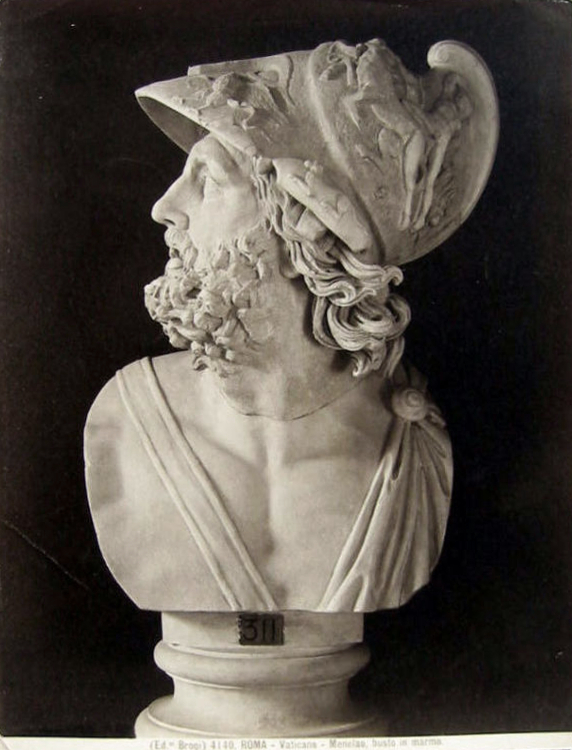
Menelaus
🗡 heroKing of Sparta, husband of Helen
Menelaus was the king of Sparta whose stolen wife Helen was the cause of the Trojan War — yet he survived the war, the return, and old age, a rare happy ending among Greek heroes.
The Trojan War
💭 conceptWar, fate, heroism
A ten-year siege of Troy by a coalition of Greek kings, sparked by the abduction of Helen and shaped by the rivalries of the gods.
Theseus
🗡 heroFounder-hero of Athenian democracy
The hero who killed the Minotaur and later united Attica under Athens, becoming the mythological founder of Athenian democracy.

Aphrodite
⚡ godGoddess of love, beauty, desire
Goddess of love and beauty, born from the sea foam. Aphrodite's power to inspire desire was so great that even the gods were not immune.
Aphrodite
⚡ godGoddess of love, desire, and beauty
The goddess born from sea-foam whose power over desire could override the will of gods and mortals alike.

Sparta
🏛 placeMilitary state of Laconia
Sparta was the austere military state whose warriors were the most feared in Greece — whose stand at Thermopylae became the definition of courage.

Trojan War
💭 conceptThe ten-year war that defined Greek mythology
The Trojan War was the central event of Greek mythology — a ten-year siege of Troy by a Greek coalition, sparked by the abduction of Helen and ended by the stratagem of the Wooden Horse.