Asteria
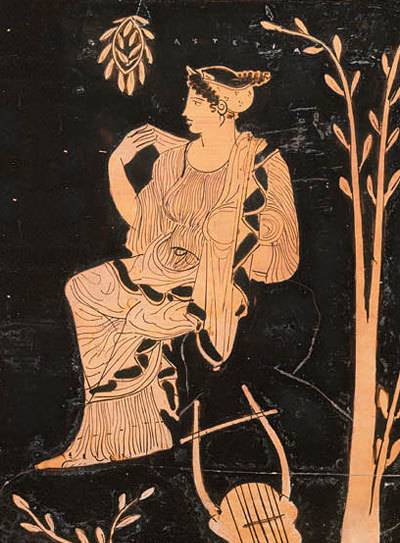
Asteria was a Titaness who leapt into the sea to escape Zeus's advances and was transformed into the island of Delos — birthplace of Apollo and Artemis.
The Myth of Asteria
Asteria, Titaness of falling stars and nocturnal prophecy, was daughter of Coeus and Phoebe and sister to Leto. When Zeus pursued her, she transformed into a quail and leapt into the sea, becoming the floating island of Ortygia — later known as Delos, where Leto would give birth to Apollo and Artemis. Asteria's self-sacrifice thus created the most sacred birthplace in Greek religion. With the Titan Perses she bore Hecate, goddess of crossroads and magic, whom Zeus honoured above all other Titans' children. Asteria stood at the junction of Titan and Olympian worlds — through Delphi's Apollo and Delos's sanctuary, her legacy shaped Greek worship for centuries.
Parents
Coeus and Phoebe
Symbols
Fun Fact
Asteria literally became the ground her niece and nephew were born on — self-sacrifice creating a birthplace for the next generation of gods.
Words We Inherited
English words and phrases that trace back to this myth. See our full guide to English words from Greek mythology.
Explore Further
Leto
🏔 titanMotherhood, Modesty
A gentle Titaness and mother of the twin Olympians Apollo and Artemis, persecuted by Hera across the world before finding refuge on Delos.
Rhea
🏔 titanTitaness of fertility, motherhood, the mountain wilds
Mother of the Olympian gods and wife of Kronos. Rhea saved the infant Zeus from being devoured by his father, enabling the rise of the Olympians.
Clymene
🏔 titanFame, Renown
An Oceanid-Titaness best known as the mother of Prometheus, Atlas, and the other sons of Iapetus who shaped humanity's early story.
Tethys
🏔 titanTitaness of the primal ocean
The great Titaness of the sea who nursed Hera and whose union with Oceanus produced all the world's rivers and springs.
Dione
🏔 titanOracle, Femininity
A shadowy Titaness worshipped at Dodona alongside Zeus, sometimes named as the original mother of Aphrodite before the sea-foam version became dominant.
Eurynome
🏔 titanPastures, Wide Rule
A Titaness who in some traditions ruled Olympus alongside her husband Ophion before being overthrown by Cronus and Rhea in a divine coup.
Rhea
🏔 titanTitaness mother of the Olympians
The great Titaness who saved Zeus from being swallowed by Kronos, enabling the entire Olympian order to exist.
Perses
🏔 titanTitan of destruction
Perses was the Titan of destruction and ravaging — father of Hecate, the great goddess of crossroads and magic.
Eurynome
🏔 titanPre-Olympian queen of the cosmos
In the Pelasgian creation myth, Eurynome ruled the universe with Ophion before the rise of the Titans.
Dione
🏔 titanTitaness and mother of Aphrodite
An ancient Titaness worshipped at Dodona as the consort of Zeus and, in Homer's tradition, the mother of Aphrodite.
Eurybia
🏔 titanMastery of the Seas, Sea Power
An ancient sea goddess whose name meant "wide force," bridging the generation between the primordial ocean and the Titan dynasty.
Phorcys
🏔 titanSea Dangers, Hidden Depths
An ancient sea god of the deep's hidden perils, father of many of Greek mythology's most famous monsters including the Gorgons and the Graeae.