Thyestes
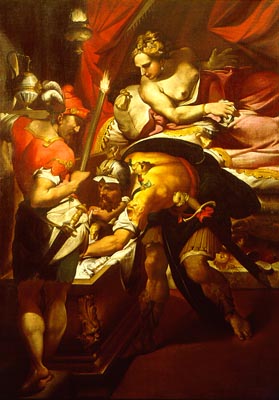
Brother of Atreus who seduced his sister-in-law and was tricked into eating his own children at the feast of Atreus.
The Legend of Thyestes
His brother served him his own sons for dinner — then showed him their hands and heads on a platter. The feud between Atreus and Thyestes began when Thyestes seduced Atreus's wife Aerope and stole a golden lamb that guaranteed kingship of Mycenae. Atreus pretended to reconcile, invited Thyestes to a feast, and served him the flesh of his own murdered sons. When Thyestes had eaten, Atreus revealed the children's remains. The sun itself reversed course in horror. Thyestes was exiled and later fathered Aegisthus by his own daughter (on an oracle's advice), and Aegisthus would eventually murder Agamemnon. The curse of Atreus echoes through every generation until Orestes breaks it.
Parents
Pelops, Hippodamia
Children
Aegisthus
Symbols
Fun Fact
The sun reversed its course in the sky when Thyestes unknowingly ate his children — the cosmos itself recoiled.
Explore Further
Myrtilus
🗡 herocurse
Charioteer of King Oenomaus bribed by Pelops to sabotage his master's chariot, then murdered by Pelops and the origin of the Pelopid curse.
Atreus
🗡 herovengeance
King of Mycenae who murdered his nephews and fed them to his brother Thyestes, establishing the bloodiest family curse in myth.
Aerope
🗡 heroAdultery, royalty
Queen of Mycenae whose adultery with Thyestes caused the devastating curse upon the House of Atreus
Chrysippus
🗡 heroNone recorded
A son of Pelops whose abduction by Laius of Thebes brought a curse upon the house of Laius and introduced the theme of transgression that haunted the Oedipus cycle
Pelops
🗡 heroFounder of the Peloponnese dynasty
Pelops was the prince served as food to the gods by his father Tantalus, restored to life with an ivory shoulder, and founder of the cursed dynasty that ruled Mycenae.
Oedipus
🗡 heroKing who fulfilled the prophecy of killing his father and marrying his mother
The tragic king of Thebes who unknowingly killed his father and married his mother, fulfilling a prophecy he had spent his life trying to avoid.
Pelops
🗡 herokingship
Son of Tantalus, restored to life by the gods with an ivory shoulder, who won his bride by cheating in a chariot race and cursed his line.
Tantalus
🗡 heroKing punished with eternal hunger and thirst
A king who offended the gods by serving them his own son as a meal. His punishment in Tartarus — standing in water that recedes when he tries to drink, beneath fruit that pulls away when he reaches for it — gave us the word "tantalize."
Clytemnestra
🗡 heroQueen who murdered Agamemnon
Clytemnestra murdered Agamemnon on his return from Troy, driven by rage over Iphigenia's sacrifice.
Amyntor
🗡 heroKingship, paternal conflict
King of Eleon or Ormenion whose curse upon his son Phoenix led to one of the Iliad's most poignant speeches
Aegisthus
🗡 herovengeance
Son of Thyestes who murdered Agamemnon to avenge his father, ruling Mycenae with Clytemnestra for seven years.
Tereus and Philomela
🗡 herovengeance, transformation
The myth of a Thracian king who assaulted his sister-in-law and cut out her tongue, only for the sisters to exact gruesome revenge.