Panotii
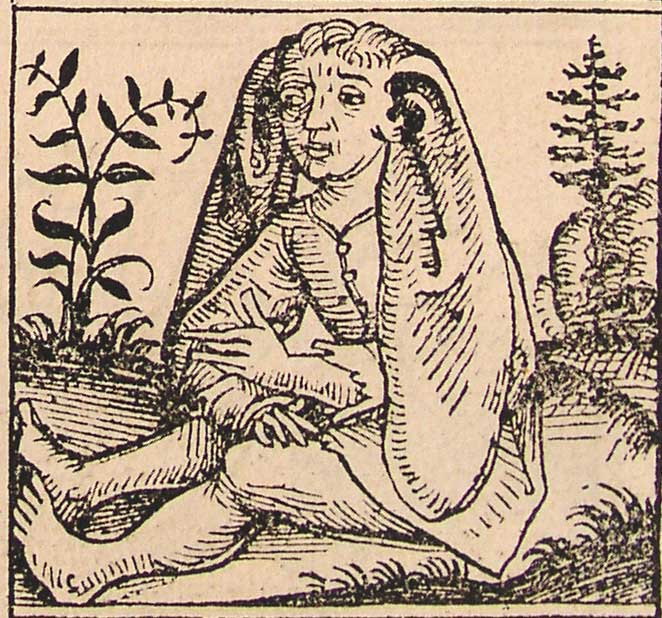
A race of people with ears so enormous they could wrap them around their bodies as blankets
The Myth of Panotii
The Panotii lived at the edges of the known world — Scythia, India, or the unnamed north, depending on the source — and they had ears that reached to their knees. At night, they spread their ears flat on the ground and slept on one while covering themselves with the other. The ears served as both mattress and blanket.
Ctesias mentioned them. Pliny elaborated. Pomponius Mela added that the Panotii were shy and fled from strangers at great speed, their enormous ears streaming behind them like sails. They could not be caught because the ears somehow aided their running — acting as wings or simply being too bizarre a sight for pursuers to process.
Appearance and Powers
The Panotii belonged to a specific genre of Greek ethnographic imagination: the monstrous races of the world's edges. The Greeks populated the unexplored regions of their maps with plausible impossibilities — people with one eye, people with no mouths, people with feet so large they used them as parasols. The Panotii were among the least threatening of these, being essentially regular humans with a single exaggerated feature.
Some scholars connect them to misunderstood reports of ear-stretching practices in various cultures, or to hooded garments that might have looked like enormous ears to confused travellers reporting at third hand.
Encounters with Heroes
Medieval cartographers included the Panotii on their mappa mundi, placing them faithfully at the world's edge. They survived in manuscript margins for centuries — gentle, ear-wrapped sleepers on the frontier of the possible.
Symbols
Fun Fact
The Panotii used their own ears as sleeping bags — one ear as a mattress, the other as a blanket — making them mythology's most ergonomic race
Explore Further
Cynocephali
🐉 creatureExotic races, borders
Race of dog-headed people described by Greek geographers as dwelling at the edges of the known world
Sciapod
🐉 creaturefabulous races
A one-legged race who lay on their backs using their single enormous foot as a sunshade
Pygmies
🐉 creaturelegendary races,birds
A legendary race of diminutive humans, each a pygme (about thirteen inches) tall, who lived in Africa or India and were engaged in perpetual warfare with the cranes who migrated through their territory.
Leucrocotta
🐉 creaturebeasts
A swift hybrid beast from India with a mouth that stretched from ear to ear and a ridge of bone instead of teeth
Panes
🐉 creaturenature spirits
A race of goat-legged nature spirits modelled after the god Pan, haunting wild mountains and forests
Cyclops
🐉 creatureOne-eyed giant
Race of one-eyed giants. The original three Cyclopes forged Zeus's thunderbolts; later Cyclopes were savage shepherds, the most famous being Polyphemus.
Gryphon
🐉 creaturebeasts
Eagle-headed lion guardians of Scythian gold who waged eternal war against the one-eyed Arimaspi
Sirens
🐉 creatureEnchanting singers who lured sailors to death
Dangerous creatures whose irresistible singing lured sailors to shipwreck on the rocky coast of their island. Only Odysseus and the Argonauts survived hearing their song.
Centaurs
🐉 creatureHalf-human, half-horse beings
A race of beings with the upper body of a human and the lower body of a horse. Most were wild and unruly, but the wise Chiron was the exception — teacher of heroes.
Cyclopes
🐉 creaturesmithing, monstrous
One-eyed giants who existed in two distinct traditions: divine craftsmen who forged Zeus's thunderbolts, and savage pastoral giants encountered by Odysseus.
Onokentauros
🐉 creaturehybrid creatures
A wild desert-dwelling creature combining human intelligence above the waist with donkey nature below
Satyr
🐉 creatureSpirits of wild nature
Satyrs were rustic nature spirits of the woodlands, companions of Dionysus, depicted with horse-like ears and tails, known for their love of wine, music, and revelry.